








Category: Bail

  • Canada’s Criminal Code Is Changing: What It Means If You’re Facing Charges Today

    Canada’s Criminal Code Is Changing: What It Means If You’re Facing Charges Today

    I spoke with someone a few weeks ago who had just been charged after what he thought was a routine situation and was urgently searching for a criminal defence lawyer in Canada to understand what to do next.

    “It all happened so fast,” he told me. “I thought I’d have time to figure things out. Next thing I know, I’ve got court dates, conditions, and paperwork I don’t even understand.”

    That confusion is becoming more common.

    Canada’s criminal justice system is changing, not in one dramatic moment, but through a series of reforms that are quietly reshaping how cases are handled. Faster timelines, stricter procedures, more reliance on digital evidence, and less room for delay. For someone facing charges, these changes aren’t theoretical. They affect what happens to you from day one.

    Let’s walk through what’s actually changing, and what it means if you’re accused of a crime in Canada today.

    The System Is Moving Faster, Whether You’re Ready or Not

    One of the biggest shifts in recent years is speed.

    Courts across Canada have been under pressure to reduce delays, especially after rulings that set strict timelines for how long a case can take before it risks being thrown out. The result? A system that no longer tolerates slow movement.

    On paper, that sounds like a good thing. Nobody wants to spend years waiting for a case to resolve.

    But here’s the reality: faster timelines don’t just pressure the courts, they pressure you.

    You may have less time to:

    • Understand your charges
    • Gather evidence
    • Work with a lawyer on your defence

    I’ve seen people assume they can “deal with it later,” only to realize deadlines have passed, disclosure has already been reviewed, and key decisions have been made without them fully understanding the consequences.

    The system is faster now. If you’re not prepared early, you’re already behind.

    Bail Is More Complicated Than People Expect

    criminal defence lawyer in Canada

    A lot of people still think bail is simple: you get arrested, you get released, and you deal with it later.

    That’s not always how it works anymore.

    Bail hearings have become more detailed, especially in cases involving repeat allegations or public safety concerns. Courts are taking a closer look at who gets released, under what conditions, and why.

    What does that mean in practice?

    It means:

    • More conditions attached to your release
    • Stricter scrutiny of your background
    • Greater risk of being held in custody if things don’t go smoothly

    And those conditions matter more than people realize. Missing one check-in, breaking a curfew, or misunderstanding a restriction can lead to new charges, separate from the original one.

    I’ve seen cases where the bail conditions became a bigger problem than the initial allegation.

    Hybrid Offences: More Flexibility, More Uncertainty

    One of the quieter but important changes is the expansion of hybrid offences.

    This gives prosecutors the ability to choose how they want to proceed, either as a less serious summary offence or a more serious indictable one.

    From a legal perspective, that adds flexibility.

    From your perspective, it adds uncertainty.

    Two people charged with similar conduct can face very different outcomes depending on how the Crown proceeds. Penalties, timelines, and even long-term consequences can shift based on that decision.

    This is where strategy matters. Early discussions, how your case is presented, and how your lawyer engages with the Crown can influence the direction things take.

    Digital Evidence Is Now Central, Not Secondary

    Ten years ago, digital evidence supported a case.

    Today, it often defines it.

    Text messages, emails, social media activity, location data, these aren’t side details anymore. They are often the core of the Crown’s case.

    And here’s the part people underestimate: context doesn’t always translate well in court.

    A message sent as a joke, a comment taken out of context, or a conversation missing key pieces can be interpreted very differently when presented as evidence.

    I’ve seen cases built almost entirely on message threads, where the outcome depended on how those messages were understood.

    If you’re accused of something, assume your digital footprint will be examined closely.

    Court Is Becoming More “Efficient”, But Less Personal
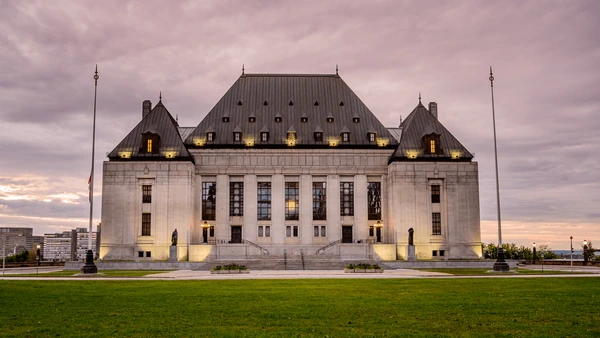
    Court Is Becoming More “Efficient

    Another noticeable shift is how court proceedings are handled.

    Remote hearings, virtual appearances, and streamlined procedures are now common. On the one hand, this makes the system more efficient. Fewer delays, fewer in-person appearances.

    On the other hand, it changes how people experience the process.

    It’s easier to:

    • Miss a virtual appearance
    • Misunderstand instructions
    • Feel disconnected from what’s happening in your own case

    The court may feel less formal, but the consequences are the same.

    The margin for error is smaller. Things move quickly, and the expectation is that you keep up.

    Sentencing Is Shifting, But Not Always in the Way You Expect

    There’s been a push toward alternatives to traditional sentencing, especially for non-violent offences.

    Diversion programs, community-based resolutions, and restorative justice are becoming more common. In the right situation, these can help avoid a criminal record altogether.

    But this isn’t automatic.

    Eligibility depends on:

    • The nature of the offence
    • Your background
    • How the case is handled early on

    At the same time, for more serious offences, penalties remain strict, and in some cases, increasingly so.

    The system is trying to balance rehabilitation with accountability. Where your case falls on that spectrum depends on a lot of moving parts.

    Your Rights Haven’t Changed, But How You Use Them Matters More

    Despite all these changes, the fundamentals are still there.

    You are presumed innocent.

    You have the right to a fair trial.

    You have the right to legal representation.

    But here’s the difference: the system now expects you to assert and use those rights properly, and quickly.

    Staying silent when appropriate, not over-explaining, complying with lawful instructions, and getting legal advice early, these things matter more than ever.

    Trying to “handle it yourself” or explain your way out of a situation often does more harm than good.

    What This Actually Means for You

    If you’re charged with a criminal offence in Canada today, you’re stepping into a system that is:

    • Faster
    • More procedural
    • More reliant on documentation and digital evidence
    • Less forgiving of delays or mistakes

    That doesn’t mean the system is unfair, but it does mean you need to be prepared.

    Small decisions early on, what you say, what you do, when you get advice, can shape how your case unfolds months later.

    Why Acting Early Can Change Everything

    One of the most common mistakes people make is waiting.

    Waiting to speak to a lawyer.

    Waiting to understand the process.

    Waiting to “see what happens.”

    By the time they take action, key opportunities are already gone.

    Early legal involvement can:

    • Identify weaknesses in the case against you
    • Help shape how charges are handled
    • Prevent mistakes that create additional problems
    • Open the door to alternative resolutions

    Once the process moves forward, options narrow. That’s just how the system works now.

    Final Thought: 

    Canada’s Criminal Code overhaul isn’t just about new laws. It’s about a different pace, a different structure, and a different set of expectations.

    If you’re accused of a crime today, you’re dealing with a system that moves faster, relies more on evidence you may not even realize exists, and leaves less room for error.

    That doesn’t mean the outcome is predetermined.

    But it does mean one thing is clear: how you respond, and how early you respond, can make a real difference in where things end up.

    Disclaimer: This article is for general informational purposes only and does not constitute legal advice. Criminal law is complex and fact-specific. Every case is different. If you have been charged with or are under investigation for a criminal offence in Canada, speak with a qualified criminal defence lawyer to understand your specific situation.


  • Thou shall follow your bail conditions!

    Thou shall follow your bail conditions!

    Thou shall follow your bail conditions. 

    Because freedom is fragile — and justice is what keeps it alive. 

    So… What About This Bail Thing?  

    I’m not sure even divine intervention could help me fit this topic into one blog post, but here it goes. Because really, without understanding the history behind “bail” — how it evolved through time, how it was enshrined in our Constitution, and how it compares to what happens in other parts of the world — we can’t truly appreciate what it means or why it matters.

    Now, I’m not going to pretend to be a historian or quote philosophers and scholars who wrote about prisons and revolutions.  Hmm… never mind, I’m going to. Aleksandr Solzhenitsyn, in The Gulag Archipelago, put it best: 

     “You only have power over people as long as you don’t take everything away from them. But when you’ve robbed a man of everything, he’s no longer in your power—he’s free.”

    He wrote about men taken in the night, vanishing without trial or bail, their fates decided not by justice but by fear. 

    For me, that’s not just a passage from history — it’s personal. It’s my father’s story.

    He was taken away one night by people we didn’t know. No warrant, no explanation — just gone. For three long months, we didn’t even know where he was. There was no bail, no hearing, no chance for anyone to intervene. When we finally found him, he was standing with a noose around his neck. His childhood friend — now part of the revolutionary guard — stepped in at the last moment. 

    The condition for his release was simple but cruel: he had to promise never to speak of women’s rights or say anything against the government.

    And he agreed. They shaved his head, took the rope away, and let him go.

    But the memory — that rope, that helplessness, the silence that followed — killed him from the inside, one day at a time. 

    And that, right there, is why bail matters. 

    It’s not just a legal technicality or courtroom procedure. It’s a safeguard, a promise that no one can be stripped of their liberty without oversight, without reason, without a fair chance to defend themselves. It’s one of those quiet, powerful protections that separate democracy from tyranny.

    Under Section 11(e) of our Canadian Charter of Rights and Freedoms, the cornerstone of our Constitution and the umbrella that shelters so many of our rights, every person has 

    “the right not to be denied reasonable bail without just cause.”

    That single phrase carries centuries of hard-learned lessons about justice, fairness, and freedom. It reminds us that liberty cannot be a privilege handed down by the state — it must be a right protected from it.

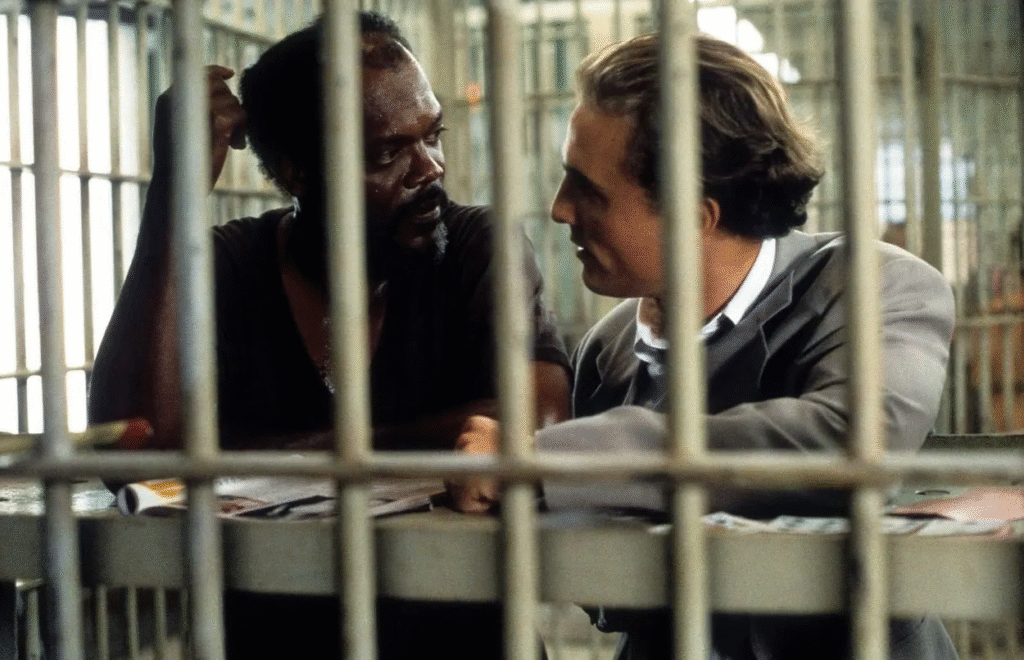
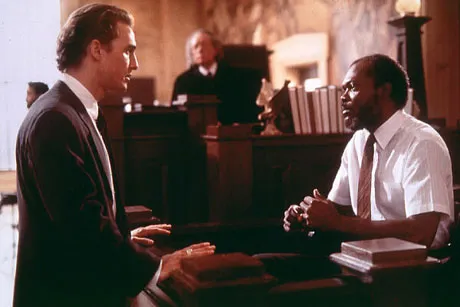
    Now, I’m going to borrow from one of my favourite closing arguments in film history — from A Time to Kill.

    “I’m going to ask you all to close your eyes while I tell you the story. I want you to listen to me. I want you to listen to yourselves. Go ahead. Close your eyes, please.”

    This is a story about a young man in his late twenties. He has a lengthy criminal record, the kind that makes judges frown before the file is even opened. In his younger years, he battled drug addiction. 

    He broke into houses, stole whatever he could, just to feed his habit.

    Then, he met a lawyer who cared — someone who didn’t just fight for him in court, but helped him find the support and resources to rebuild his life. He listened. He got clean. He found work. He started a family. For the first time, he had something to lose.

    But life wasn’t easy. He worked long hours, often past midnight, still barely able to pay his bills. One night, his manager was closing the store and began counting the cash. The numbers didn’t add up. Two thousand dollars were missing. He counted again. Still short.

    He called the young man; the same man who once stole to survive. Then he called the police.

    The young man sits crying alone as he’s detained, broken, exhausted, and scared. By the time morning comes, he’s been charged. And now, it’s time for his bail hearing. 

    He stands before the court, watching as his bail hearing unfolds. 

    You can see him beaten, broken, trembling. 

    And because of his criminal record, he’s detained — left to wait in the cold silence of detention until his trial, or until the harshness of confinement breaks him into pleading guilty to a crime he didn’t commit. 

    By then, he has lost his job, his home, his family, and above all, his dignity. The memory of detention — the helplessness, the silence that followed, slowly kills him from the inside, one day at a time. 

    Now, slowly open your eyes. Imagine this young man is your son, your brother, your nephew. He fought the hardest battle of his life — addiction — and won, only to find himself trapped once more. Despite the presumption of innocence, he waits for his trial behind bars.

    So what now? Bail reform isn’t a matter of black and white. It’s not a zero-sum game between public safety and individual rights. 

     It’s about finding balance — about recognizing that behind every charge, every case number, and every court appearance, there is a human being.

    We must remember that bail isn’t mercy. It’s justice. It’s the recognition that a person’s liberty should not depend on their past, their income, or the weight of society’s assumptions.

    Reforming bail isn’t about making the system softer, it’s about making it fairer. Because the measure of a just society isn’t how quickly it punishes, but how carefully it protects.

    And maybe, just maybe, if we can see the humanity in that young man — or in my father, or in anyone standing before a judge — we might begin to understand what justice is really supposed to look like. 

    Written by Sidney Zarabi
    Criminal Defence Lawyer 

    If you enjoyed this post or believe these conversations matter, please subscribe and share to help spread awareness about justice, fairness, and reform.

  • When “Crime” Is Just the Cost of Surviving.

    When “Crime” Is Just the Cost of Surviving.

    Part I: Detention Center or Social Housing Program

    Liberty lost is never truly regained.

    But what price do we put on a single day of liberty — in a country that prides itself on being free and democratic?

    What’s the opportunity cost of spending a day in detention?

    I’m no economist, but I did the math — if you can even call it that. Because here’s the truth:
    the opportunity cost of spending a night in an overcrowded detention center is far greater than most of us dare to admit.

    Let’s set aside, for a moment, the shame, isolation, hopelessness, and the quiet death of hope for a better future — though, let’s be honest, those are veryexpensive ticket items.

    And let’s say you’re even fine with the criminal record you’re about to add to your growing collection — another pricey addition to the tab.

    Now what?
    You’ll likely lose custody or care of your kids.
    Miss your rent.
    Lose your housing (if you had any).
    Probably your job, too.
    And with that, the last few social ties holding you up.

    So what’s left to go on the price tag?
    Because someone always pays it.

    A plea deal? A few thousand bucks to your lawyer.
    Whether it’s through legal aid or a private retainer, that money’s coming out of your pocket — directly or indirectly.

    So here’s my free advice: don’t do it.
    Let your lawyer go broke.
    Keep those few thousand in your pocket — you’re going to need them more than your lawyer does.

    Because…

    I met a girl who sang the blues,
    And I asked her for some happy news,
    But she just smiled and turned away.

    I went down to the sacred store,
    Where I’d heard the music years before,
    But the man there said the music wouldn’t play.

    And in the streets, the children screamed,
    The lovers cried, and the poets dreamed.
    But not a word was spoken;
    The church bells all were broken.

    And the three men I admire most —
    The Father, Son, and the Holy Ghost —
    They caught the last train for the coast…
    The day the music died.

    Part II: About That Trial…

    You ever notice how many of our so-called criminal problems have nothing to do with actual crime? Let me tell you about Jack’s family — because, truth be told, I meet a new Jack almost every week these days.

    I am Jack’s nephew.

    “So… about that trial. How much would it cost me again? Hmm. Any way we can just wrap this up so I can get my job back and go home? Please. I’ll plead to anything — I just need to move on.”

    You can hear the exhaustion in his voice — not guilt, not rebellion. Just a man who can’t afford another round in the system.


    I am Jack’s grandson.

    “I was supposed to get that part-time job at the coffee shop… or maybe that overnight shift flipping burgers. Never got either. But you stay out in the cold long enough with three hopeless buddies, and you start doing dumb stuff. We just wanted hockey gear. Now I’m in and out of court. Guess that’s one way to stay busy.”

    He laughs, but it’s the kind of laugh that hurts to hear.


    I am Jack’s cousin.

    “When they closed the plant, I had nothing left to lose. Sleeping in my car through this freezing mess — no shower, no hope — it’s not exactly a luxury resort. After you’ve lost everything, a criminal record doesn’t even sting anymore. My family’s already written me off. Honestly, I don’t care anymore. I just don’t want a trial. I’ve been humiliated enough.”

    You can’t argue with that kind of surrender. You can only listen.


    I am Jack’s daughter.

    “My parents spent their life savings to send me to college in Canada. They were so proud. God, I had big dreams — start a business, hire people, maybe even build a family here. But my work visa renewal just got rejected. I can’t tell them. After everything they sacrificed? I just… can’t. So I started drinking. Then came the drugs. Then the debt.
    Can we please just avoid a trial? I didn’t do it. It was the other girl. I can’t take this anymore.”

    You sit there, and all you can think is: this isn’t crime. This is survival gone sideways.


    The Real Crime? Poverty.

    Imagine now that you are Jack.
    And these are the conversations I pray never to have with my clients…
    But they’re the ones I’m having, over and over again.

    Our problem isn’t criminal — it’s economical.
    Because when you take away opportunity, dignity, and a decent night’s sleep, you don’t get criminals.
    You get people who are just tired of losing.

    About the Writer
    Sidney Zarabi is a criminal defence lawyer and the founder of 10(B) Criminal Law Center. He spends his days (and too many late nights) representing people whose lives have been entangled with the justice system — often not because they’re criminals, but because they’re broke, broken, or both.

    He writes to remind us that behind every case file is a story — usually one that starts with hope, not harm.